
Learn
Learn about the climate wedges
Explore the links below to understand what is a wedge, how wedges link to global warming, what strategies can deliver wedges of mitigation, and trade-offs between them.
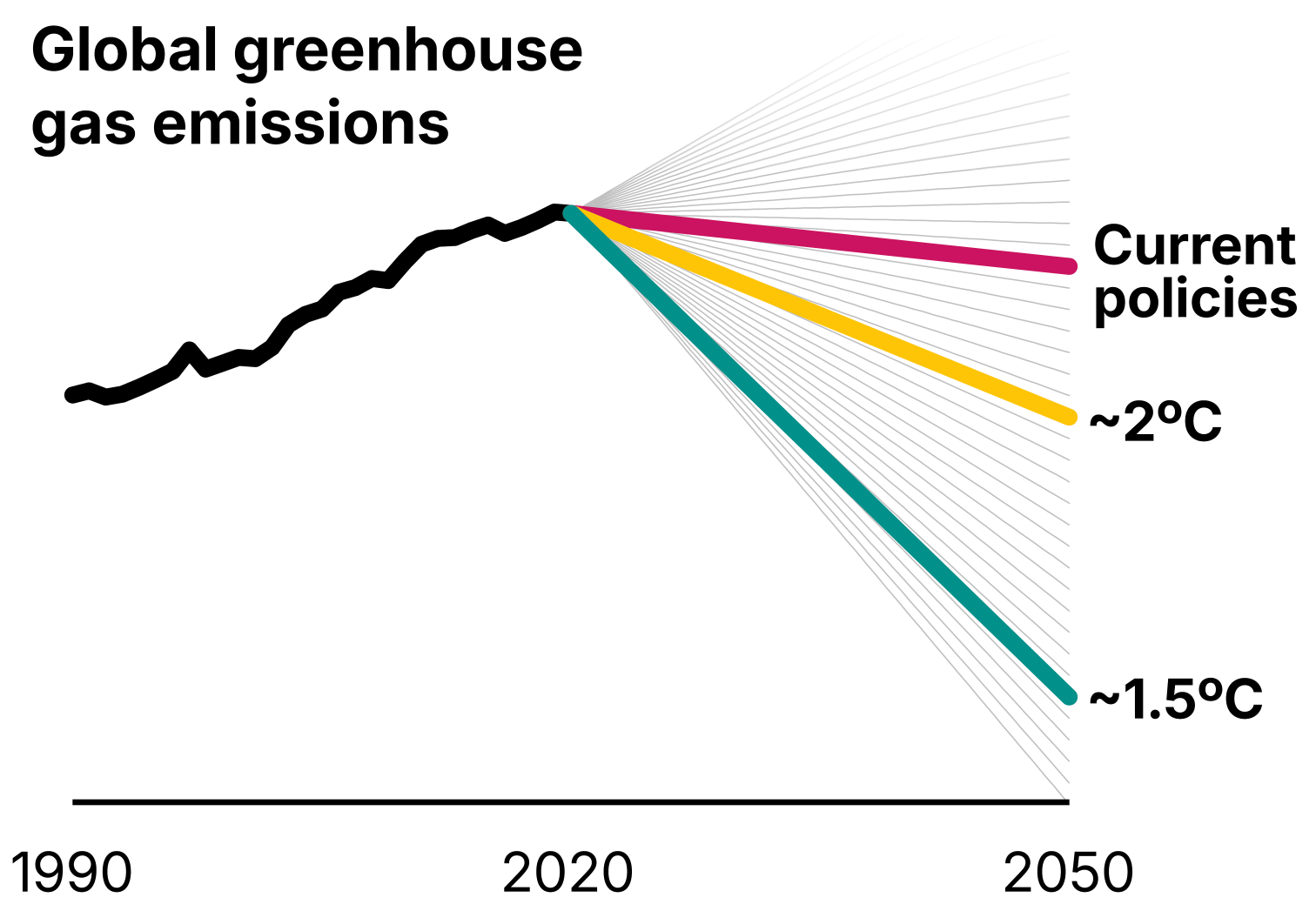
Climate wedges are a simple, transparent way to build and debate decarbonisation pathways. Many climate models search for a single plan optimised for cost. Here, you decide what plan to build, and compare different choices on a level playing field.
Wedge are a standard unit of climate action. Think of them as building blocks, all the same size, which you stack together to bend the emissions curve down.
There are 36 strategies which can each deliver one or more wedges of mitigation. You can pick and choose between them, building a portfolio that you believe is most realistic, safest, cheapest, or whatever criteria matter to you.
To use the framework, start by choosing a warming or emissions goal. That tells you how many wedges you need. Then pick a portfolio of strategies to meet that target.
Trillions of pathways are possible, but you should think about trade-offs, constraints and synergies, and judge what combinations are plausible or acceptable.
Flexibility is part of the point. Baselines and targets are contested, so this tool helps you explore implications rather than predict the future.
Use the four links below to go deeper on wedge basics, warming, strategy details, and trade-offs.
What is a wedge?
Get started with the language of climate wedges, and why they are a useful unit for climate action planning.
Relating wedges to warming
Understand how wedges of emissions reduction will influence global warming. Future temperatures depend on the baseline trajectory and how many wedges bend this downwards.
Strategies that can deliver wedges
Learn about the actions that can deliver climate wedges across sectors: what can have an impact, and how widely it must be deployed.
Trade-offs between strategies
Strategies can reinforce or constrain each other. Read through the interactions, co-benefits, and potential tensions that might influence your pathways.